 Universitas Padjadjaran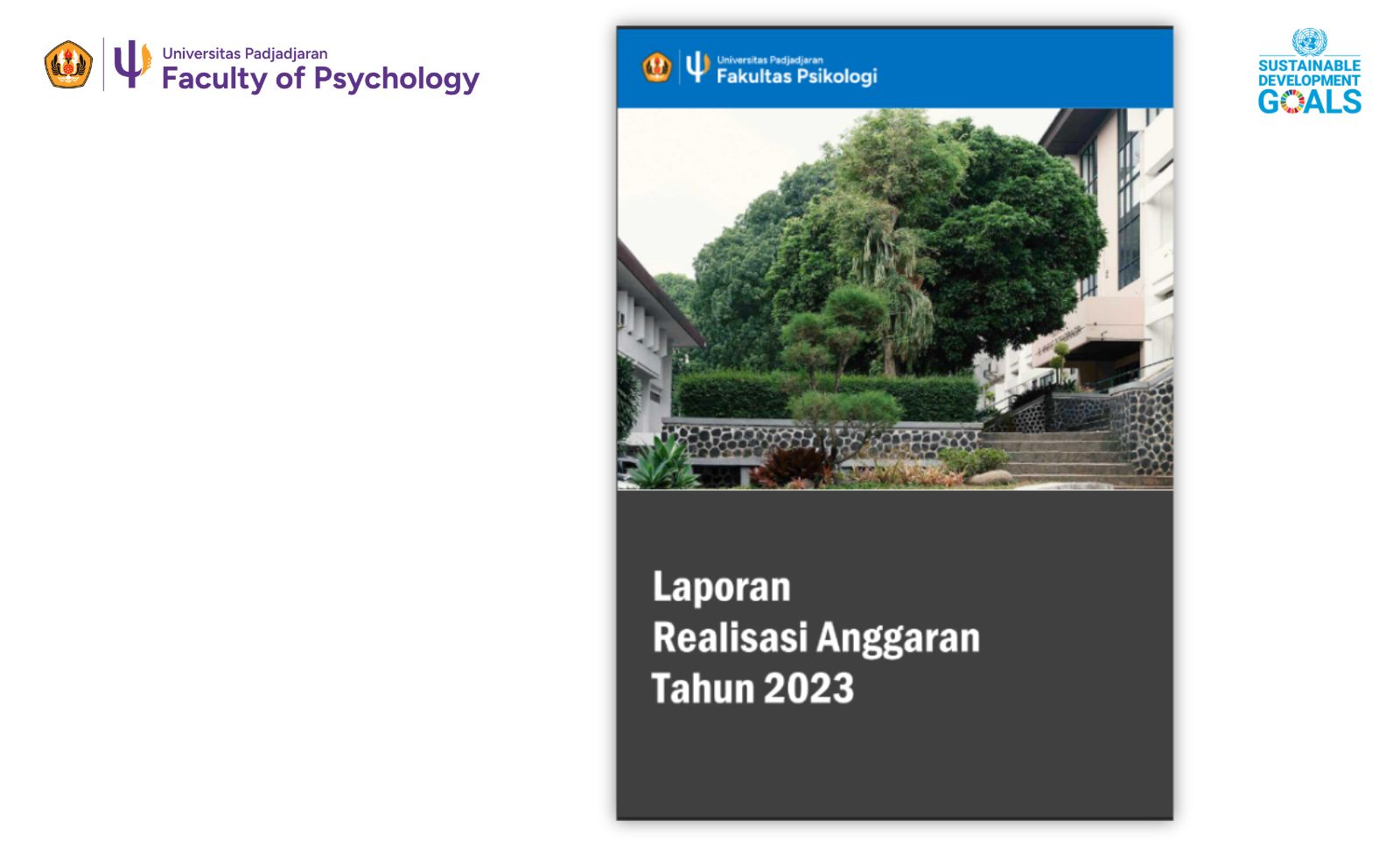
The Faculty Psychology Universitas Padjadjaran Publishes 2023 Financial Report, Reaches 92%
Author Shafrina W, Nabila M
The Faculty of Psychology Universitas Padjadjaran (Fapsi Unpad) officially published the Accountability Report regarding the Financial Report for 2023. The report was submitted in commemoration of the 61st Anniversary of Fapsi Unpad. This report is also an important part of the anniversary book that is often published annually.
In the report, Fapsi Unpad outlines the use of the budget spread over nine main sectors. Each sector supports various faculty strategic programs. This report provides a detailed overview of the faculty’s budget utilization over the past year and is organized based on nine key performance index (KPI) that have been set.
The allocated budget has been used effectively to support various academic and non-academic activities. First, organizational development. Through KPI 1, Fapsi actively fosters student organizations, facilitates participation in competitions, and provides entrepreneurship training and assistance in writing research proposals.
Second, career development. KPI 2 focuses on optimizing the role of the Career Development Center (CDC) in helping students get jobs. In addition, Fapsi Unpad also increases the role of alumni in the graduate recruitment process and implements competency certification.
The next sector is the impact on society. Through KPI 3, Fapsi Unpad seeks to ensure that academic and research activities provide actual benefits to society.
Furthermore, increasing the capacity of human resources. KPI 4 is directed at improving the competence of lecturers and education personnel through various training and development programs. Then, innovation and cooperation. Fapsi continues to encourage innovation and business diversification through PTNBH and establish cooperation with various domestic and foreign companies.
Another sector is increasing research funds. KPI 6 focuses on optimizing research funds through increasing the number of funded proposals and collaborating with various research institutions.
The seventh sector is improving the quality of education. Through KPI 7, Fapsi Unpad seeks to improve the quality of learning by applying various learning methods that are innovative and relevant to industry needs.
Sector eight is the accreditation of study programs. KPI 8 is directed at maintaining and improving study program accreditation. This index can be seen from the latest achievements that have been obtained, where Fapsi Unpad has successfully achieved FIBAA international accreditation, and in June 2023, a re-visitation will be carried out.
The last sector is operations and development. KPI 9 includes office operational activities, organizing the Anniversary, and various other development activities.
The report shows that the average budget funds realized in 2023 reached 92%. This achievement is considered very satisfying and in line with the strategic plan that has been prepared by the faculty.
The Importance of Budget Design for Fapsi Sustainability
The draft budget made by Fapsi plays an important role in the sustainability and development of the faculty. The budget is used for various purposes, including facility development, development of education personnel, as well as supporting academic programs such as the implementation of lectures, practicums, and support for student research programs.
In addition, it also has a role in optimizing cooperation with foreign universities, such as inviting guest lecturers from abroad for some courses and conducting research cooperation.
This effort is also to improve faculty accreditation, where Fapsi has successfully achieved international accreditation from FIBAA. In 2023, Fapsi received a visit from the FIBAA team for international accreditation visitation, which became one of the important achievements for the faculty.
With the publication of this report, Fapsi demonstrates a strong commitment to maintaining transparency and accountability in the use of the budget while ensuring the sustainability and development of the faculty in the future.