 Universitas Padjadjaran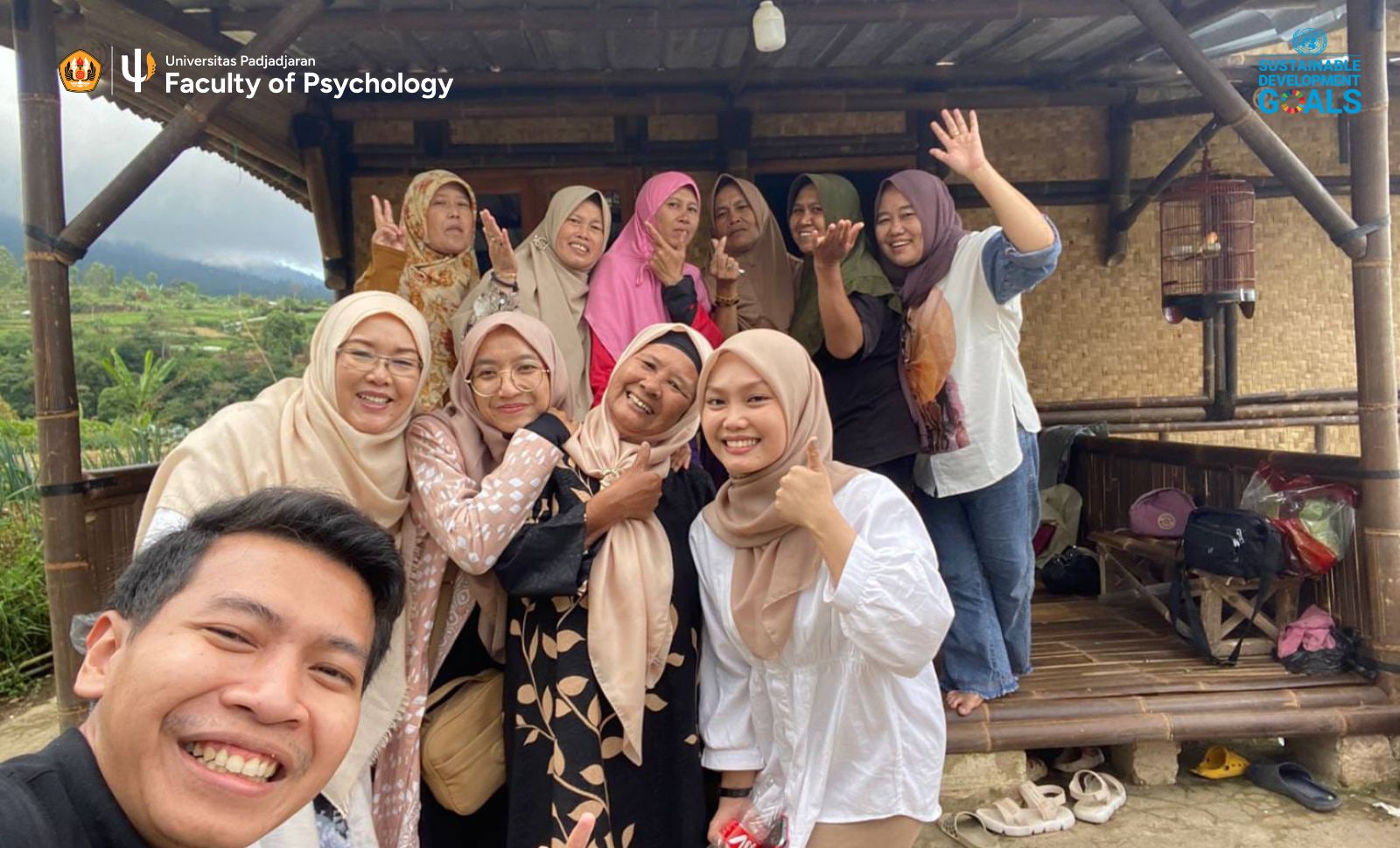
Developing Housing Industry Development through Capacity Building Programme in PEKKA Cianjur to Reduce Poverty of Women Headed Households
Author Kinanthi AL
Students of Master of Professional Specialisation in Social Psychology, Faculty of Psychology, Universitas Padjadjaran initiated a community empowerment programme at PEKKA Cianjur. The students implemented a capacity building programme that aims to provide policy recommendations to reduce poverty in women-led families.
PEKKA, a community that focuses on women’s empowerment and was established in 2000, has a vision to strengthen women’s leadership as heads of households. With recognition from the state and society, PEKKA seeks to make government policies, values, and socio-cultural norms inclusive and based on the principles of gender equality and justice.
The main problem faced is that many women who are heads of households in Cianjur district face barriers such as limited monitoring of resources, limited access to business funding, a shift in society towards consumptive patterns, and so on.
Through the research conducted, the role of PEKKA in empowering female heads of households and the barriers faced is examined. It is important to understand how the construction of the ideal woman is understood in the socio-cultural context of Kabupaten Cianjur, PEKKA’s response to this interpretation, and its influence on the organisation’s work process.
Given the complexity of poverty faced by female heads of households and the obstacles that occur, it is important to propose policies that involve the government, fieldworkers, community leaders, and a forum of policy makers. PEKKA Cianjur has been working with the Ministry of Women’s Empowerment and Child Protection to develop home industry actors through a pilot project programme and collaborating with the Cianjur District Government to support the development of home industries for PEKKA members.
Solutions offered include policy recommendations, increased attention to economic development, and more in-depth interventions related to economic empowerment. With these steps, it is expected to provide positive benefits for women headed households in Cianjur Regency.